
B2B buyer needs are ever-evolving. With tight budgets, the AI boom, and digital selling becoming the new normal, buyers are more frugal, prioritizing efficiency and value. Sales teams need a good understanding of these changing needs to serve them better.
Let’s break down the five top sales trends and give you strategies to leverage these trends to your advantage.
Why Sales Trends Matter
Sales trends are more than just fleeting industry buzz—they are crucial indicators of where the market is heading and how buyer expectations are evolving. By keeping a pulse on these trends, sales teams can better align their sales strategies with the current needs and preferences of buyers, allowing them to stay ahead of the competition.
Understanding sales trends enables businesses to anticipate challenges, capitalize on emerging opportunities, and tailor their approaches to meet the demands of an increasingly discerning market. In a landscape where buyer behavior is constantly shifting, staying informed about sales trends is key to driving growth and maintaining a competitive edge.
Trend #1: Software spending will surge despite economic challenges
Credit: G2’s Buyer Behavior Report 2024
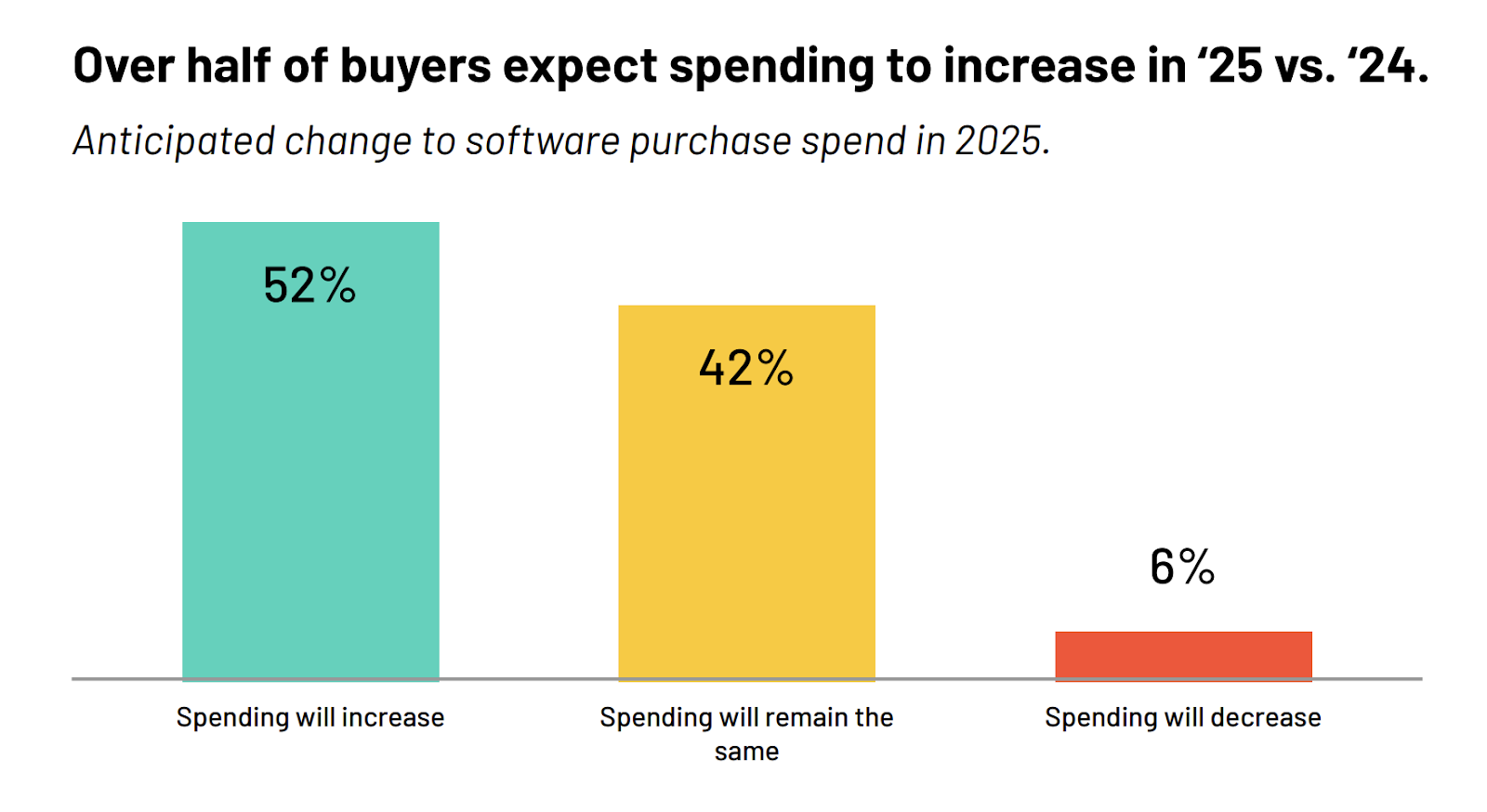
SaaS buyers are ready to loosen their purse strings and spend more on software. In fact, according to a G2 study, 52% of them plan to invest more. But with the looming economic challenges, they are more prudent about their software purchases. They shape their purchase decisions based on three key parameters: quick ROI, security, and value for money.
How to Leverage This Trend
- With buyers becoming more discernible than ever, the best way forward for sellers is to double down on lead generation, prioritizing high-intent buyers.
- Instead of focusing on your product’s bells and whistles, tweak your marketing collateral to include the product’s impact on ROI, security features, and price-performance ratio.
- Add pricing details along with a tier-wise breakdown of features, integrations, and add-ons to websites and marketing collateral to illuminate the product’s value early on.
Trend #2: Quota hitting is harder than ever, but AI is here to assist
Selling will get more difficult due to a myriad of reasons ranging from higher ROI expectations, an expanded buying team, and a longer sales cycle. Buyers want to see quicker results. While around 57% of buyers are ready to wait 3 months to measure their ROI, 11% expect an immediate impact.
A typical B2B sales cycle is around four months long and an expanded buying committee plays a huge role. With more people involved in the buying process, sellers need to convince both immediate users as well as CXOs to push the deal. This takes time and stretches the sales cycle further.
How to Leverage This Trend
- Let AI be your ally in selling. Use AI-assisted software to gauge buyer sentiment and automate admin tasks like list building and sales call reporting.
- Focus on building relationships with buyers rather than pushing them for a sale. Invest time and effort in personalizing your outreach with tailored use cases and benefits to sway them.
- Find your champions fast and supply them with resources to get internal buy-in. This way, you can fast-track a sale.
Trend #3: Buyer enablement is key, and self-service tools pave the way
With tech-savvy millennial and GenZ buyers stocking leadership roles, buyer enablement through self-service tools is the way ahead. They prefer minimal seller intervention and expect self-service tools to lead the way during all stages of the buyer journey. In fact, 47% of salespeople who offer self-serve tools to their prospects are seen to be more successful than their counterparts.
How to Leverage This Trend
- Create a self-service tool kit with interactive product demos, recorded webinars, and other resources to equip your buyers.
- Bake the self-service model into every stage of the buyer journey using interactive product demos, analytics tools, action-oriented chatbots, and contract intelligence tools.
- Track and analyze various self-service metrics and combine them with physical touchpoints to gauge buyer awareness and plan a timely seller intervention.
Trend #4: Buyers prefer upgrading software post-purchase
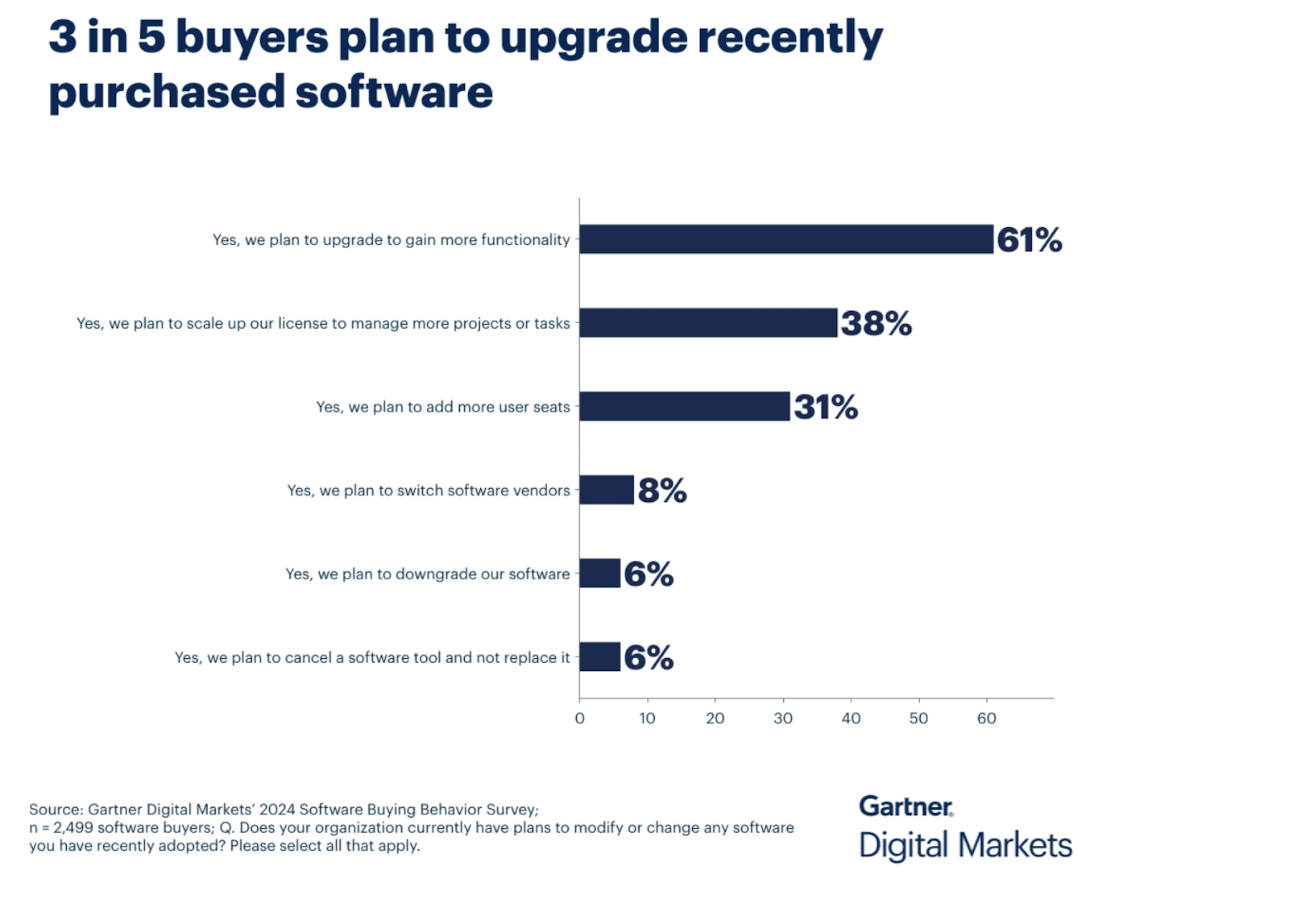
Image Credits: Gartner
B2B buyers are always on the lookout for better solutions to meet their goals. According to Gartner, 58% of buyers evaluate newly bought tools and rightsize them after purchase. They upgrade software to earn more functionality, increase project scope, and add more seats. In the same way, they downsize or cancel subscriptions if they aren’t satisfied with the tool’s performance or find a better alternative.
How to Leverage This Trend
- Offer proper customer onboarding with guided product demos, in-app guidance, and knowledge bases to reduce customer activation time and help them get value faster.
- Build a dedicated customer success team and equip them to detect potential churns early on. Intervene via email or call when you notice a decline in software usage and help them resolve their issues quickly.
- Specify your product’s value in marketing and sales collateral to attract the right audience and reduce the chances of future dissatisfaction.
Trend #5: Hybrid selling is here to stay
Hybrid selling, introduced as a makeshift solution to cope with the pandemic, is now the most preferred and effective sales strategy. Seller organizations love it as it brings them 50% more revenue than traditional selling methods.
Similarly, for salespeople, it is the flexibility to find and reach out to prospects through their preferred channel that makes it attractive to sellers. And for the buyers, it is the liberty to explore options through multiple channels without a salesperson breathing down their neck.
How to Leverage This Trend
- Couple the hybrid selling model with the self-serve approach to meet your audience’s needs better. Establish an omnichannel presence, find buyers’ preferred channels, and reach them through those for the best results.
- Don’t put in-person selling on the sidelines. Coach your reps to adopt a consultative approach to selling where they act as facilitators who help buyers make better decisions.
- Build a remote-first tech stack to ride the coattails of this trend and bring in more revenue. Use sales engagement platforms to tie all your sales activities in one place and track them better.
Leverage Trends for More Sales
Security and pricing are the chief factors that will steer purchasing behavior. With a clear notion of their needs, buyers are ready to invest more time and effort in finding the right software for them.
They don’t expect salespeople to show them the ropes of a product but to equip them with resources to hasten purchase decisions. They also expect seller organizations to have an omnichannel presence and sellers to have a consultative approach to selling.
About the Author
Carl Torrence is a Content Marketer at Marketing Digest. His core expertise lies in developing data-driven content for brands, SaaS businesses, and agencies. In his free time, he enjoys binge-watching time-travel movies and listening to Linkin Park and Coldplay albums. You can find him on Twitter and LinkedIn.


